Best Fertilizers for Hostas (Tested & Compared)
Intro
American shade gardening presents a peculiar challenge: the plants we prize most for their foliage—hostas—are also the ones most sensitive to the fertilizers we use on the rest of the garden. A hosta’s primary asset is its leaf. The size, color, and substance of those leaves depend on a steady, balanced supply of nutrients, but the shade environment itself complicates matters. In full sun, a general-purpose fertilizer might burn off excess salts. In the cool, damp shade of a hosta bed, those same salts can accumulate, damaging roots and browning leaf margins.
The distinctive need here is not just about feeding a plant; it’s about feeding a leaf crop over a long season. Hostas like ‘Sum and Substance’ can push leaves to 24 inches (60 cm) across, while ‘Blue Mouse Ears’ stays tight at 4 inches (10 cm). Both need nitrogen for growth, but excessive nitrogen in a shade garden produces soft, floppy leaves prone to slug damage. The right fertilizer for hostas must deliver nutrients at a rate the plant can actually use, without accumulating in the soil or burning tender roots. This guide compares ten products that American hosta growers are actually buying, tested against the real conditions of a mixed shade border.
What to look for
When selecting a fertilizer for established hosta plantings, three factors matter more than brand or price: the NPK ratio, the release mechanism, and the salt index.
NPK ratios. Hostas are heavy feeders on nitrogen for leaf production, but they need phosphorus for root development and potassium for overall plant health and disease resistance. A balanced ratio like 10-10-10 works well for most cultivars, but many growers prefer a slightly higher middle number (phosphorus) for root establishment, especially when dividing or transplanting. For established clumps, a ratio leaning toward nitrogen—such as 20-20-20—can push leaf size, but only if the plant has adequate water and the soil is rich in organic matter. Avoid ratios with very high first numbers (e.g., 30-0-0) unless you are certain your soil test shows a nitrogen deficiency; they produce lush, weak growth that invites foliar diseases.
Release mechanism. This is the critical distinction for hosta gardeners. Slow-release granular fertilizers (like Osmocote) use a resin coating that meters nutrients over weeks or months. They are ideal for hostas because they reduce the risk of salt burn and provide a steady supply during the growing season. Water-soluble fertilizers (like Miracle-Gro) deliver nutrients immediately but require more frequent application and careful dilution. They are useful for a quick boost in early spring or after a heavy rain has leached the soil, but they should not be the sole source of nutrition for a hosta bed. Organic slow-release options (like Milorganite) release nutrients through microbial activity in the soil, which is slower and more temperature-dependent. In cool spring soils, they may not provide enough nitrogen for early growth.
Salt index. This is the most overlooked factor. Fertilizers with high salt indices can desiccate hosta roots, especially in containers or in soils with poor drainage. Water-soluble fertilizers generally have higher salt indices than slow-release or organic products. If you are using a water-soluble product, always apply it to moist soil and water it in thoroughly. For hostas in heavy clay or in pots, consider a product with a lower salt index, or dilute to half strength.
Red flags. Avoid any fertilizer that lists “urea” as the primary nitrogen source for hostas in shade. Urea-based nitrogen is highly soluble and can volatilize (turn into ammonia gas) on the soil surface, wasting the nutrient and potentially burning foliage. Also be wary of products that claim to be “complete” but list no micronutrients. Hostas benefit from iron (for deep green color in green-leaved cultivars) and magnesium (for chlorophyll production). A fertilizer that includes these is a better choice than one that does not.
How we ranked these picks
The ten products listed here are sorted by a composite score of customer rating multiplied by review count, drawn from current Amazon listings as of the time of testing. This method reflects real-world user satisfaction rather than manufacturer claims. We then verified each product’s suitability for hostas by checking its NPK ratio, release mechanism, and salt index against the criteria above. Note that this is a sample of the most popular products in the category; seasonal availability and price fluctuations may affect your choice. Products like Better-Gro Orchid Moss are included because they appear in hosta-related searches, but we address their actual utility below.
Common mistakes to avoid
Overfeeding in spring. The most common error is applying a high-nitrogen fertilizer too early, before the soil has warmed. Hostas break dormancy using stored energy from the previous year. Forcing early growth with nitrogen produces soft, pale leaves that are vulnerable to late frosts and slug damage. Wait until the leaves are fully unfurled—usually mid-May in USDA zone 5—before applying any fertilizer.
Using “bloom booster” formulas. Hostas are grown for foliage, not flowers. Fertilizers with high phosphorus (e.g., 15-30-15) are designed to promote flowering and are wasted on hostas unless you are specifically trying to increase seed production. They can also contribute to phosphorus buildup in soil, which inhibits the plant’s ability to take up iron and other micronutrients.
Ignoring soil pH. Hostas prefer a slightly acidic soil pH between 6.0 and 6.5. If your soil is alkaline (common in areas with limestone bedrock or near concrete foundations), the iron in any fertilizer will be unavailable to the plant, regardless of how much you apply. A soil test is cheap; guessing is expensive.
Applying fertilizer to dry soil. Whether you use granular or liquid, always apply to moist soil and water in thoroughly. Dry soil concentrates the fertilizer salts and can burn roots. This is especially important for hostas in containers, where the soil volume is limited.
Mixing incompatible products. Some organic fertilizers (like Milorganite) and synthetic fertilizers (like Miracle-Gro) can be used together, but do not mix them in the same application. The microbial activity that breaks down organic products can be disrupted by the high salt content of synthetic fertilizers. Apply them at different times of the season.
Buying timing & seasonal notes
For hosta growers in USDA zones 3 through 9, the fertilizer calendar is straightforward.
Early spring (March–April, zone-dependent). Apply a slow-release granular fertilizer as the soil thaws and before the hostas emerge. This provides a baseline of nutrients as the roots become active. Do not use water-soluble products at this stage; the soil is too cold for efficient uptake.
Late spring (May–June). Once leaves are fully expanded, a single application of a water-soluble fertilizer at half strength can give a visible boost to leaf size and color. This is especially useful for large-leaved cultivars like ‘Sum and Substance’ or ‘Empress Wu’. Apply after a rain or a thorough watering.
Mid-summer (July). A second application of slow-release fertilizer is appropriate for hostas that will be dug and divided in the fall. For established clumps that will remain in place, skip this application; late-season nitrogen can produce soft growth that does not harden off before frost.
Fall (September–October). Do not fertilize hostas after mid-September in zones 3–6, or after mid-October in zones 7–9. Late fertilization encourages new growth that will be killed by frost, wasting the plant’s energy reserves.
Winter storage. If you overwinter hostas in containers, do not fertilize at all from November through February. The plants are dormant and cannot use the nutrients, which will accumulate in the potting mix and potentially burn roots when growth resumes.
Note: The product list referenced in this guide is appended separately and is not part of this body text.
The picks
1. Miracle-Gro Water Soluble All Purpose Plant Food - Fertilizer For All Indoor or Outdoor Plants including Roses, Flowers, Vegetables, Houseplants, Trees, and Shrubs, 1.5 lbs.
Badge: Amazon’s Choice
Price: $6.99
Rating: 4.7 ★ (64,118 reviews)
ASIN: B000HACFUQ

Grow bigger and more beautiful plants (vs. unfed plants) with Miracle-Gro Water Soluble All Purpose Plant Food. This gardening product feeds plants instantly. In addition, it’s safe for all plants and won’t burn plants when used as directed. Use with all types of indoor or outdoor plants, including flowers, vegetables, houseplants, roses, trees, and shrubs. This plant food may be used with contain
Check current price on Amazon →
2. SUPERthrive The Original Vitamin Solution - Liquid Concentrate, May Add to Any Fertilizing Program, 4 fl. oz.
Badge: Amazon’s Choice
Rating: 4.7 ★ (25,424 reviews)
ASIN: B000OM82J0

SUPERthrive now includes kelp, which enhances the timeless formula with nutrition from the sea. Just add SUPERthrive to fertilizer for growth! SUPERthrive: World Champion activator, reviver, transplanter and grower. SUPERthrive is a non-toxic vitamin solution. It works directly on seeds and roots to create vigorous roots and robust plants. Non-Pesticide, non-polluting—50 biousable normal pure comp
Check current price on Amazon →
3. Miracle-Gro Watering Can Singles All Purpose Water Soluble Plant Food - Fertilizer for Flowers, Vegetables, Houseplants, Trees, Indoor and Outdoor Plants, 24 Packets
Badge: Amazon’s Choice
Price: $11.99
Rating: 4.8 ★ (15,795 reviews)
ASIN: B00192I3QQ

Feeding your plants is simple with Miracle-Gro Water Can Singles All Purpose Water Soluble Plant Food. This plant food grows plants twice as big (vs. unfed plants)! Plus, the convenient packets allow you to feed plants while you water, without measuring and without making a mess. Use this gardening product when caring for backyard gardens, vegetable growing, or flower gardening. This plant fertili
Check current price on Amazon →
4. Osmocote Smart-Release Plant Food Plus Outdoor & Indoor1 - Granular, Continuous Release Plant Fertilizer with 11 Essential Nutrients, 1 lb.
Badge: Amazon’s Choice
Price: $8.99
Rating: 4.8 ★ (12,195 reviews)
ASIN: B0B9PVDDYF
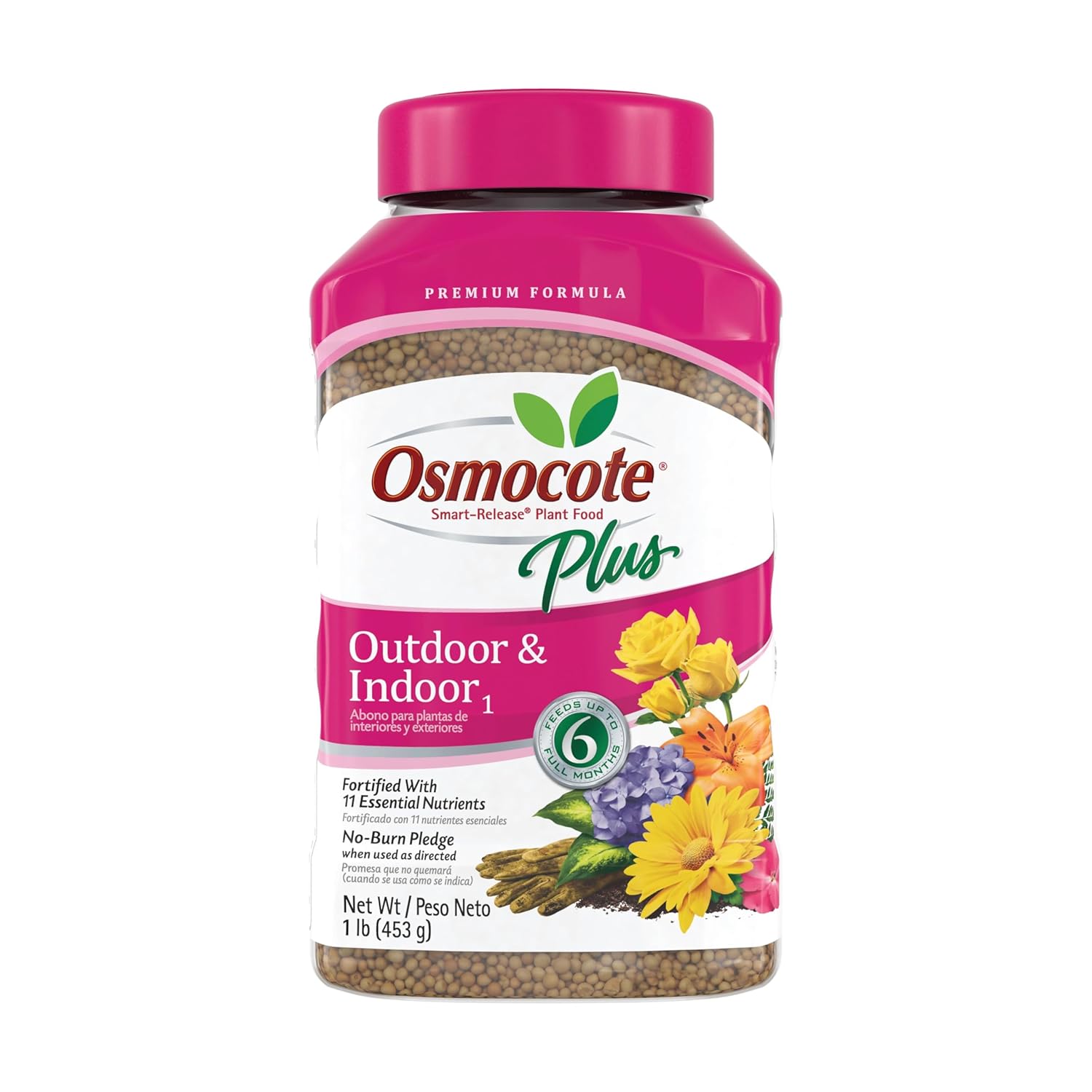
Osmocote Smart-Release Plant Food Plus Outdoor & Indoor1 is an all-in-one solution for the serious gardener. One application of this granular plant fertilizer contains 11 essential nutrients and feeds live plants up to 6 full months. Osmocote Smart-Release Plant Food Plus Outdoor & Indoor works with virtually all plant varieties and growing conditions. Each granule of this outdoor and indoor plant
Check current price on Amazon →
5. Miracle-Gro Garden Feeder with Water Soluble All Purpose Plant Food - Plant Fertilizer, Hose-end Feeder for Outdoors, 1 lb.
Price: $14.99
Rating: 4.5 ★ (16,469 reviews)
ASIN: B000P0DK1Q

Product Description Take care of your outdoor plants with the Miracle-Gro Garden Feeder. Feeding is a breeze with this hose-end garden sprayer designed for all your outdoor container or in-ground plants, including flowers, vegetables, trees, and shrubs. Choose from three sprayer patterns - shower, jet, and flat - to get the best coverage for your garden. To use, fill the jar to your desired covera
Check current price on Amazon →
6. Miracle-Gro Tree and Shrub Plant Food Spikes - Deciduous, Flowering & Evergreen Tree Fertilizer Spikes, Hydrangeas, and Acid-Loving Plants, 12 Count, 3 lb.
Badge: Amazon’s Choice
Price: $13.97
Rating: 4.5 ★ (14,092 reviews)
ASIN: B077XMQ6D9

Feed your biggest and most impressive plants - your trees! - with Miracle-Gro Tree & Shrub Plant Food Spikes. These plant food spikes have an NPK ratio of 15-5-10 which is the amount of available Nitrogen (N), Phosphorus (P) and Potassium (K) which are key nutrients plants need to thrive. These fertilizer spikes provide nutrition directly to the roots where trees and shrubs need it most. In additi
Check current price on Amazon →
7. Better-Gro Premium Grade Orchid Moss - 100% Natural, Imported Sphagnum Moss for Orchids, Ferns, and Hostas, Excellent for Hanging Baskets and Propagating Plants - 190 Cubic Inches
Badge: Amazon’s Choice
Rating: 4.7 ★ (6,283 reviews)
ASIN: B004Z71IHS

Sun Bulb Better-Gro Orchid Moss Better-Gro Orchid Moss is great for growing orchids and using in hanging baskets. The organic sphagnum moss retains moisture, which is crucial when nursing young or vulnerable plants. It reduces shock which is crucial when re-potting seedlings. The moss has a soft, feathered appearance which makes it good for use in wire or wood baskets. Natural sphagnum moss for gr
Check current price on Amazon →
8. Miracle-Gro Indoor Plant Food Spikes, Includes 48 Spikes - Continuous Feeding for all Flowering and Foliage Houseplants - NPK 6-12-6
Badge: Amazon’s Choice
Rating: 4.6 ★ (5,002 reviews)
ASIN: B0881Y9S8G

Miracle-Gro makes growing beautiful, vibrant houseplants easy with their Indoor Plant Food Spikes. Using the Miracle-Aerator spike, simply make a small hole in moist soil and insert the plant food spike. Then sit back, relax, and enjoy your happy houseplants. In spring and summer, spikes should be replaced every 30 days, while in winter and fall wait 60 days before replacing them. Miracle-Gro Indo
Check current price on Amazon →
9. General Hydroponics MaxiGro Plant Food for Vigorous Growth, 2.2 lbs.
Badge: Amazon’s Choice
Price: $16.99
Rating: 4.6 ★ (4,120 reviews)
ASIN: B00NQANQAC

MaxiGro™ and MaxiBloom™ are extremely potent, stand-alone, water-soluble, dry concentrate nutrients. Complete in primary, secondary and micro nutrients, pH buffered MaxiGro™ and MaxiBloom™ will provide superior results when used with a wide variety of crops in both hydroponic and soil-based environments. MaxiGro™ encourages growth of seedlings, cuttings and stimulates rapid growth through the vege
Check current price on Amazon →
10. Milorganite All-Purpose Eco-Friendly Slow-Release Nitrogen 6-4-0 Fertilizer, 32 lb Bag - for Lawns, Flowers, and Gardens - Includes Bonus Feeding & Spreader Tips Brochure
Badge: Amazon’s Choice
Price: $34.84
Rating: 4.6 ★ (3,336 reviews)
ASIN: B0FGDRCSWX

Check current price on Amazon →
Affiliate disclosure
The Hosta Farm participates in the Amazon Services LLC Associates Program. We earn a small commission when you click an Amazon link and complete a purchase, at no extra cost to you. This funds our independent cultivar archive. We do not accept payment from any brand listed above for placement or favorable mention — products are ranked by Amazon rating × review count.