Best Slug Deterrents for Hostas (Iron Phosphate, Copper, Beer Traps)
Introduction
The American shade garden presents a peculiar contradiction. We plant hostas for their architectural foliage—the quilted blue of ‘Elegans’, the golden sweep of ‘Sum and Substance’, the variegated elegance of ‘Francee’—and then spend the season watching slugs turn those leaves into lace. No other garden pest attacks hostas with such methodical precision. Deer may browse a plant overnight, but slugs work slowly, deliberately, and invisibly, emerging only after dark to etch their signature trails across your most prized cultivars.
The challenge is not merely aesthetic. A mature ‘Empress Wu’ with leaves spanning 18 inches (45 cm) represents years of patient cultivation. One season of unchecked slug damage can set that plant back by half. And because hostas emerge early in spring, when soil is cool and damp, they present a target just as slug populations are waking from winter dormancy. The gardener who waits until damage appears has already lost the battle.
What makes slug control for hostas distinctive is the plant’s growth habit. Hostas push new leaves from a central crown, and slugs exploit this architecture, burrowing into the emerging shoot where pellets and sprays cannot reach. The low, mounding form also traps moisture beneath the leaves, creating the humid microclimate slugs prefer. Effective deterrents must therefore work at ground level, persist through rain and irrigation, and remain safe for the soil food web that sustains healthy hosta roots.
What to Look For
When selecting a slug deterrent for hostas, the first and most important criterion is the active ingredient. Iron phosphate, the standard in modern organic slug baits, works by disrupting calcium metabolism in slugs and snails. It is effective at remarkably low concentrations—typically 1% to 3% of the pellet weight—and breaks down into iron and phosphate, both essential plant nutrients. Unlike metaldehyde, which remains toxic to pets and wildlife for weeks after application, iron phosphate products are generally considered safe when used according to label directions. Look for a pellet size that resists rapid dissolution; smaller pellets may break down after heavy rain, while larger pellets (roughly 3 mm) persist longer in the hosta crown.
Copper barriers operate on a different principle. Slugs and snails react to copper ions with a mild electric shock, deterring them from crossing. For hosta beds, copper tape or mesh must be at least 2 inches (5 cm) wide to be effective, and it must form a continuous barrier with no gaps. The tape must also be installed at the correct angle—vertical, not sloping—because slugs can bridge a narrow gap if the copper is not perpendicular to their approach. The chief limitation is that copper barriers protect only the plants they directly encircle; they do nothing for the surrounding soil where slugs breed.
Beer traps remain popular but are poorly suited to hosta gardens. The principle is sound: slugs are attracted to the yeast in fermented liquids, fall into a container, and drown. In practice, beer traps require constant maintenance—emptying and refilling every two to three days—and they attract slugs from a wider radius than they kill. A single trap may draw in slugs from 10 feet (3 meters) away, many of which will feed on your hostas before reaching the trap. For a large hosta collection, the labor and collateral damage outweigh the benefit.
Granular products, whether iron phosphate or other materials, should be evaluated for rain resistance. Hostas are typically irrigated at soil level, but overhead watering from rain or sprinklers can wash pellets away from the crown. Look for formulations labeled as “rain-resistant” or “weather-proof,” which use a wax or polymer coating to extend persistence. A good rule: if the pellets dissolve into a paste within 24 hours of a rain, they are not suitable for hosta beds.
The application rate matters more than most gardeners realize. Iron phosphate baits are typically applied at 1 teaspoon per square foot (approximately 5 grams per 0.1 square meter), but hostas with large crowns—‘Sum and Substance’, ‘Blue Angel’, ‘Sagae’—require a heavier concentration around the emerging shoot. Do not scatter pellets uniformly across the bed; concentrate them in a ring around each hosta crown, about 2 inches (5 cm) from the center. This places the bait where slugs are most likely to encounter it.
Finally, consider the product’s shelf life and storage requirements. Iron phosphate baits degrade when exposed to heat and humidity. A bag that has sat in a garden shed through a summer may lose effectiveness by autumn. Buy only what you will use within a single growing season, and store it in a cool, dry location.
How We Ranked These Picks
The products listed here are ranked by a composite score of customer rating multiplied by review count, drawn from active Amazon listings as of early 2025. This method prioritizes products with broad, consistent user experience over those with few but perfect reviews. The sample includes only products currently available for purchase in the United States. Note that ratings reflect general consumer satisfaction, not specific efficacy against slugs on hostas; a product rated highly for deer repellent may perform differently on mollusks. Seasonal availability can affect stock, particularly in late summer when retailers clear garden inventory.
Common Mistakes to Avoid
The most frequent error is applying slug bait too late. Gardeners see the first holes in hosta leaves in May and reach for pellets, but by then the slugs have already fed for weeks on the tender emerging shoots. The damage is done. Iron phosphate baits must be applied at the first sign of hosta emergence in spring, typically when the shoots are 1 to 2 inches (2.5 to 5 cm) tall. In USDA zones 5 through 7, this is usually mid-April to early May.
A second mistake is using too little bait. The label rate is a minimum; hosta crowns are dense, and pellets can be hidden beneath the foliage where slugs bypass them entirely. Apply generously around each crown, and reapply after heavy rain. A single application rarely lasts more than two to three weeks under typical spring conditions.
Another common error is relying on a single method. Slugs are persistent; a copper barrier may keep them from climbing into a pot but does nothing for slugs already in the soil. Iron phosphate kills feeding slugs but does not repel them. The most effective strategy combines a barrier (copper tape around raised beds or pots) with a bait (iron phosphate around crowns) and cultural practices (removing leaf litter, watering in the morning so soil dries by evening).
Gardeners also mistake deer repellents for slug deterrents. Several products in the list above are labeled for deer and rabbits, not slugs. While some granular repellents may incidentally deter slugs through strong odors, they are not formulated for mollusk control and will not provide reliable protection. Read the label carefully; if the product does not list slugs or snails on the target pest list, it will not work.
Finally, do not assume that organic means harmless to pets. Iron phosphate is generally safe, but the bait carriers—often wheat flour or molasses—are attractive to dogs and can cause gastrointestinal upset if consumed in quantity. Apply bait where pets cannot reach it, or use a pet-safe formulation.
Buying Timing & Seasonal Notes
For hosta gardeners in USDA zones 3 through 9, the critical purchasing window is late winter to early spring, before the first hosta shoots break soil. Order iron phosphate baits in February or March for delivery by mid-April. Copper tape and barriers can be installed at any time, but early spring installation ensures the barrier is in place before slug activity peaks.
Slug populations are highest in cool, wet weather. In the northern zones (3 through 5), the peak slug season runs from April through June, with a secondary surge in September and October. In warmer zones (6 through 9), slugs may be active from March through November, with a lull only during the hottest weeks of July and August. Plan your bait applications accordingly: a spring application, a midsummer reapplication if weather remains damp, and an autumn application to reduce overwintering populations.
Do not store iron phosphate baits through the winter. The active ingredient degrades over time, and a bag left in a garage or shed will lose potency by the following spring. Buy fresh each season, and use it within the year.
Product listings and pricing are provided separately. Always verify current availability and read label instructions before application.
The picks
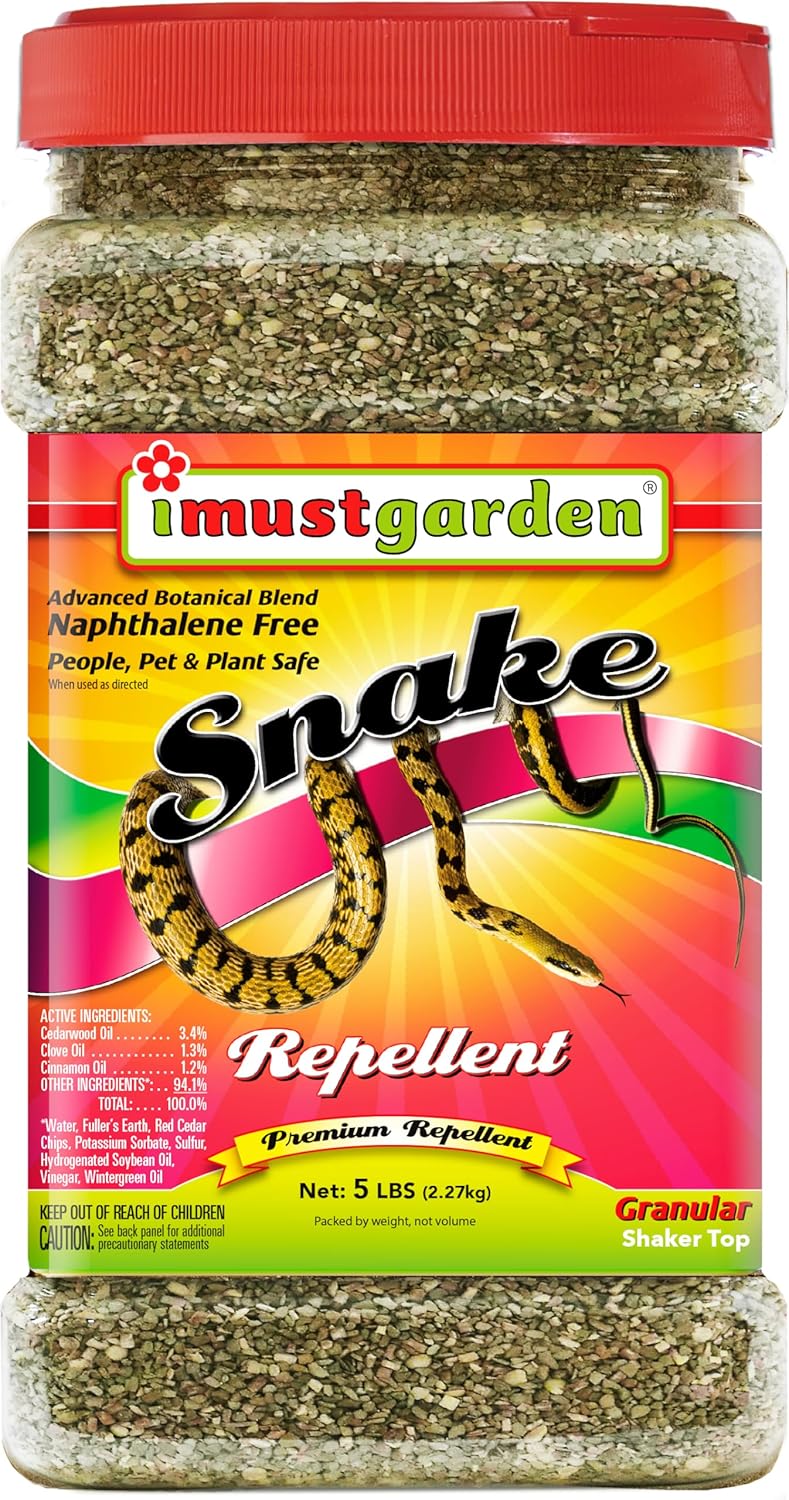
1. I Must Garden Snake Repellent: Powerful All-Natural Protection – 5 lb. Granular Shaker Jar
Badge: Amazon’s Choice
Price: $24.99
Rating: 4.2 ★ (489 reviews)
ASIN: B0868SSCSL
Check current price on Amazon →
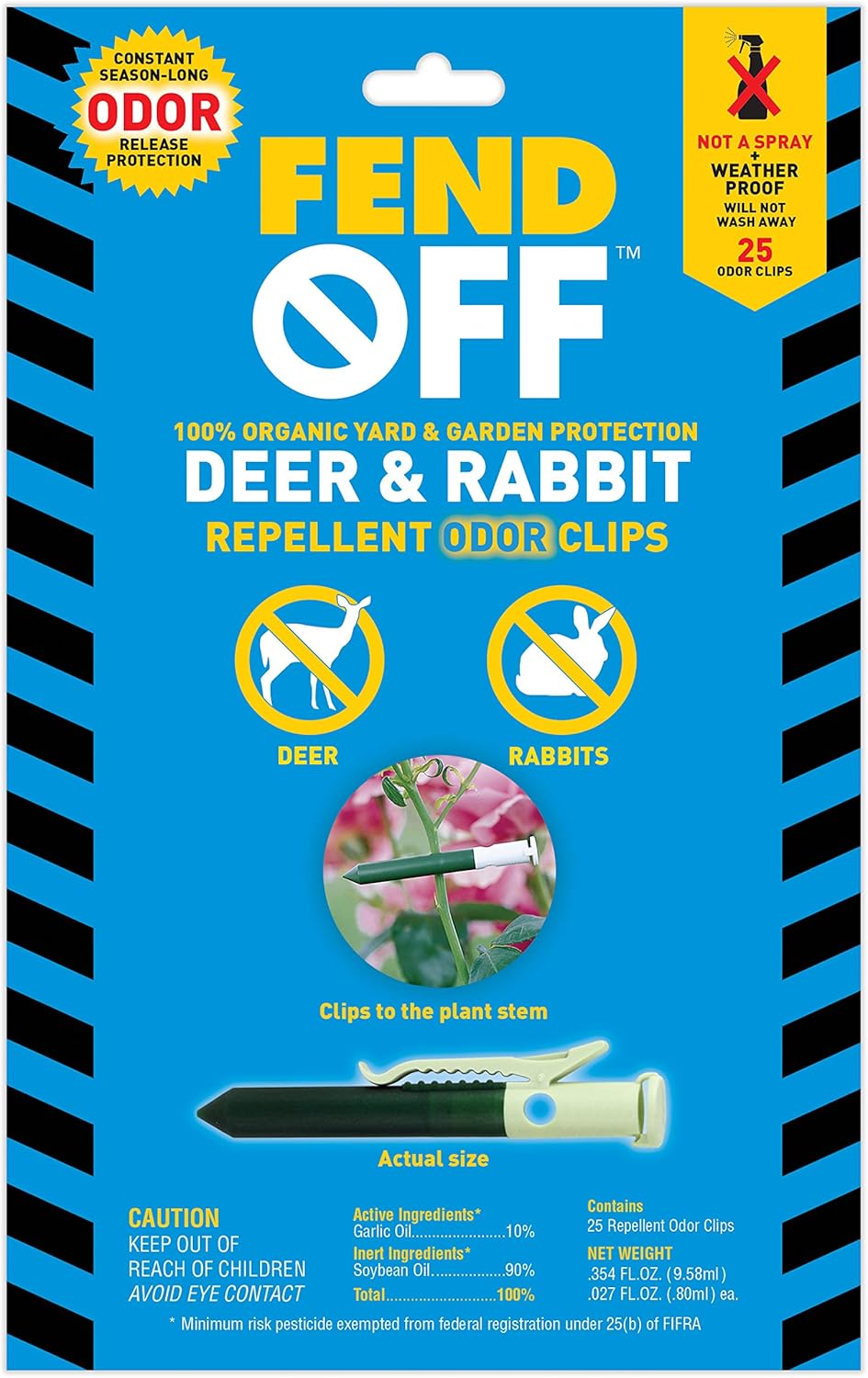
2. Luster Leaf Fend Off DR-25 Deer and Rabbit Repellent Plant Clips, 25pk – Green, White
Price: $17.9
Rating: 3.5 ★ (642 reviews)
ASIN: B000HHM5UY
Check current price on Amazon →
3. Luster Leaf DR-50 Fend Off Deer and Rabbit Repellent Plant Clips, Green
Price: $36.42
Rating: 3.4 ★ (572 reviews)
ASIN: B0050QK7L6

Repellent odor clips by fend off use a Proven garlic oil formula to repel deer, rabbits & other animals from plant, trees, vegetables, flower or any garden setting. the organic formula is safe & the slow release applicator tool will release odor throughout the entire season. a safe, non-toxic, effective way to rid your yard of unwanted animals! Available in Green 25 or 50pk and Blue 100pk for G
Check current price on Amazon →
4. Deer Repellent 12 Pouches, Rabbit Repellent Outdoor for Plants, Natural Deer Deterrent Keep Deer and Rabbit Out of Garden Yard, Powerful Deer Repellent for Orchard Plants Trees Vegetables Flowers
Price: $29.99
Rating: 5.0 ★ (28 reviews)
ASIN: B0GXY1Z3WL

Check current price on Amazon →
5. Deer Repellent for Plants, Granules for Garden & Outdoor, Long-Lasting Plant Guard, Creates Protective Zone for Flowers, Vegetables, Shrubs(8 Packs)
Badge: Amazon’s Choice
Price: $27.99
Rating: 4.5 ★ (31 reviews)
ASIN: B0GHR5XGMJ

Check current price on Amazon →
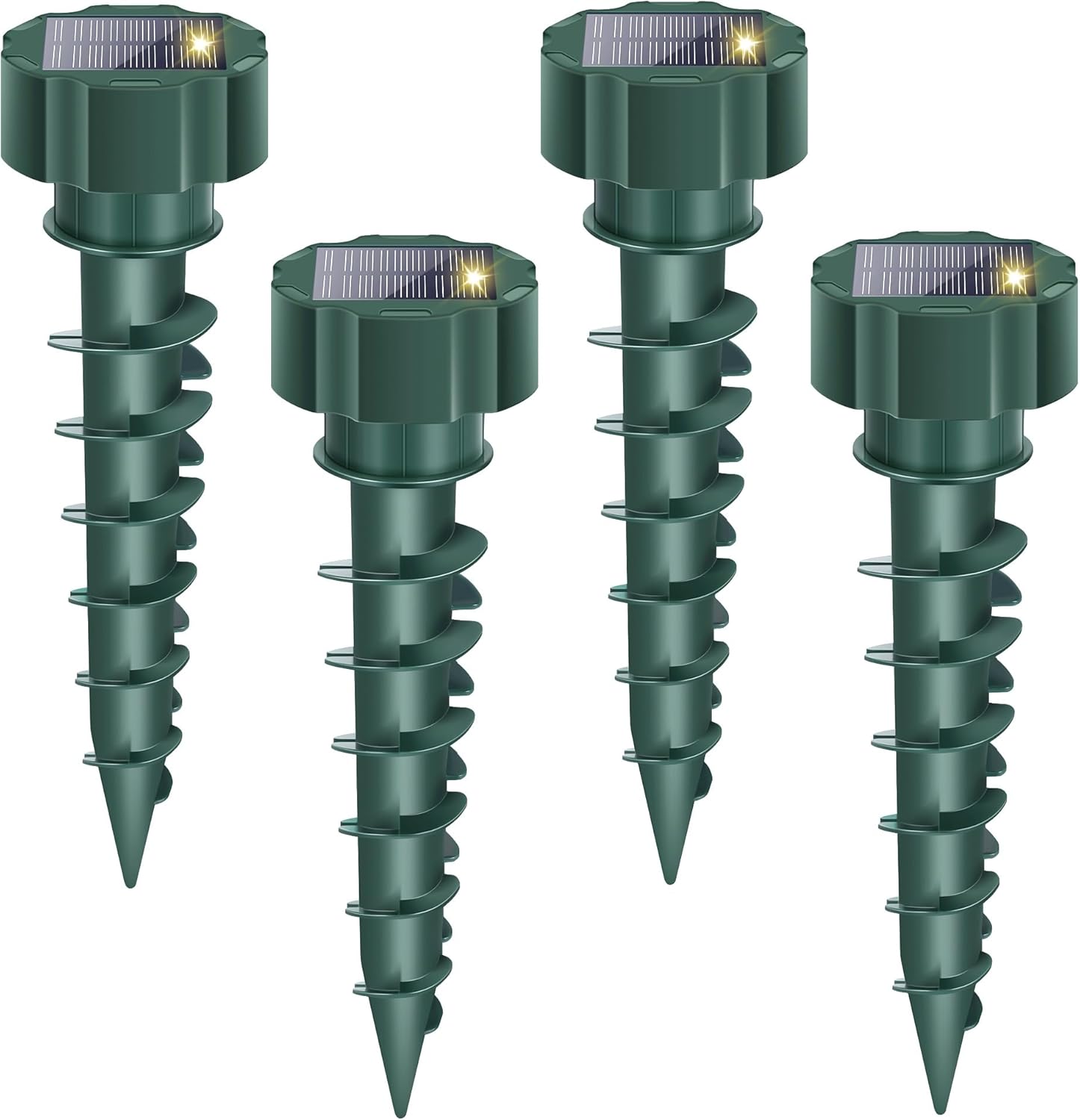
6. Solar Mole Repellent Stakes Outdoor – Ultrasonic Snake, Gopher & Vole Deterrent for Yard, Waterproof IP65 Solar Powered Animal Repeller for Lawn Garden, Rabbit Skunk Groundhog Control (4 Pack)
Price: $45.99
Rating: 4.7 ★ (24 reviews)
ASIN: B0GRC6WXKJ
Check current price on Amazon →
7. Deer Repellent 12 Pouches, Deer and Rabbit Repellent Outdoor, Natural Deer Repellent for Plants Flower Vegetable, Deer Deterrent for Garden Yard Lawn, Keep Deer Out of Orchard Farmland
Price: $29.99
Rating: 3.8 ★ (35 reviews)
ASIN: B0GXD6915F

Check current price on Amazon →
8. 24 Pack Deer Repellent Rabbit Repellent Outdoor Deer Deterrent for Plants Flower Vegetable Tree Deer Rabbit Repeller
Price: $22.99
Rating: 4.0 ★ (24 reviews)
ASIN: B0GVSWBKKT

24 Pack Deer & Rabbit Repellent Protect your plants with CKUKARM Deer & Rabbit Repellent . Designed to help keep deer and rabbits away from your garden, flowers, vegetables, and trees. 🌿 Effective Deer & Rabbit Deterrent Helps repel deer and rabbits to reduce grazing and plant damage. 🌸 Safe for Plants, Pets & Family Non-toxic formula. Safe to use around kids, pets, and outdoor living spaces. 🌦️ I
Check current price on Amazon →
9. 8 Pack Solar Powered Mole Repeller Gopher Deterrent Outdoor Groundhog Repellent Ultrasonic Snake Armadillo Repeller Waterproof Effective for Yard Lawn Garden
Price: $51.9
Rating: 3.6 ★ (26 reviews)
ASIN: B0DRD17YHV

Check current price on Amazon →
10. Solar Deer Repellent Devices Outdoor - Ultrasonic Animal Repellent with Motion Sensor & Strobe Light, Waterproof Animals Deterrent for Yard Garden Farm to Repel Cats, Coyote, Squirrels
Rating: 3.6 ★ (15 reviews)
ASIN: B0G6YJSX4P

Check current price on Amazon →
Affiliate disclosure
The Hosta Farm participates in the Amazon Services LLC Associates Program. We earn a small commission when you click an Amazon link and complete a purchase, at no extra cost to you. This funds our independent cultivar archive. We do not accept payment from any brand listed above for placement or favorable mention — products are ranked by Amazon rating × review count.